 Telegram Growth Studio
Telegram Ban Service: The Ultimate 2026 Guide to Risks, Policies, and Safe Practices
Telegram Ban Service has become one of the most searched solutions in 2026, especially by people and businesses wanting to remove harmful competitors, spammy bots, fake groups, or copyright-violating channels. This comprehensive guide will cover everything you need to know: from how Telegram bans work, to risks and refund guarantees, to case studies of successful takedowns.
Telegram Ban Enforcement in 2026: What Changed
As of 2026, Telegram's moderation has shifted noticeably. After the platform expanded its trust-and-safety team and tightened compliance under EU pressure, reports backed by clear evidence are now actioned faster, while low-quality or coordinated mass reports are increasingly filtered out by automated triage. In practice this means single-shot spam blasts no longer move the needle: a successful takedown in 2026 needs documented, repeatable violations (phishing links, impersonation, CSAM-adjacent or scam content) submitted through the right channels. Telegram also now distinguishes account, group, channel, and bot reports more granularly, so targeting the correct entity type matters more than ever. For violation-specific reporting workflows, our Telegram ban service page details current evidence requirements, and our mass report bot overview explains where automated reporting still helps in 2026.
Why People Look for Telegram Ban Services
Users typically search for a ban service when they want to:
- Ban a Telegram account spreading scams or impersonating others.
- Ban a Telegram group that distributes spam or illegal content.
- Ban a Telegram channel competing unfairly or violating copyright.
- Report and ban a bot flooding communities with fake messages.
How the Telegram Ban Process Works
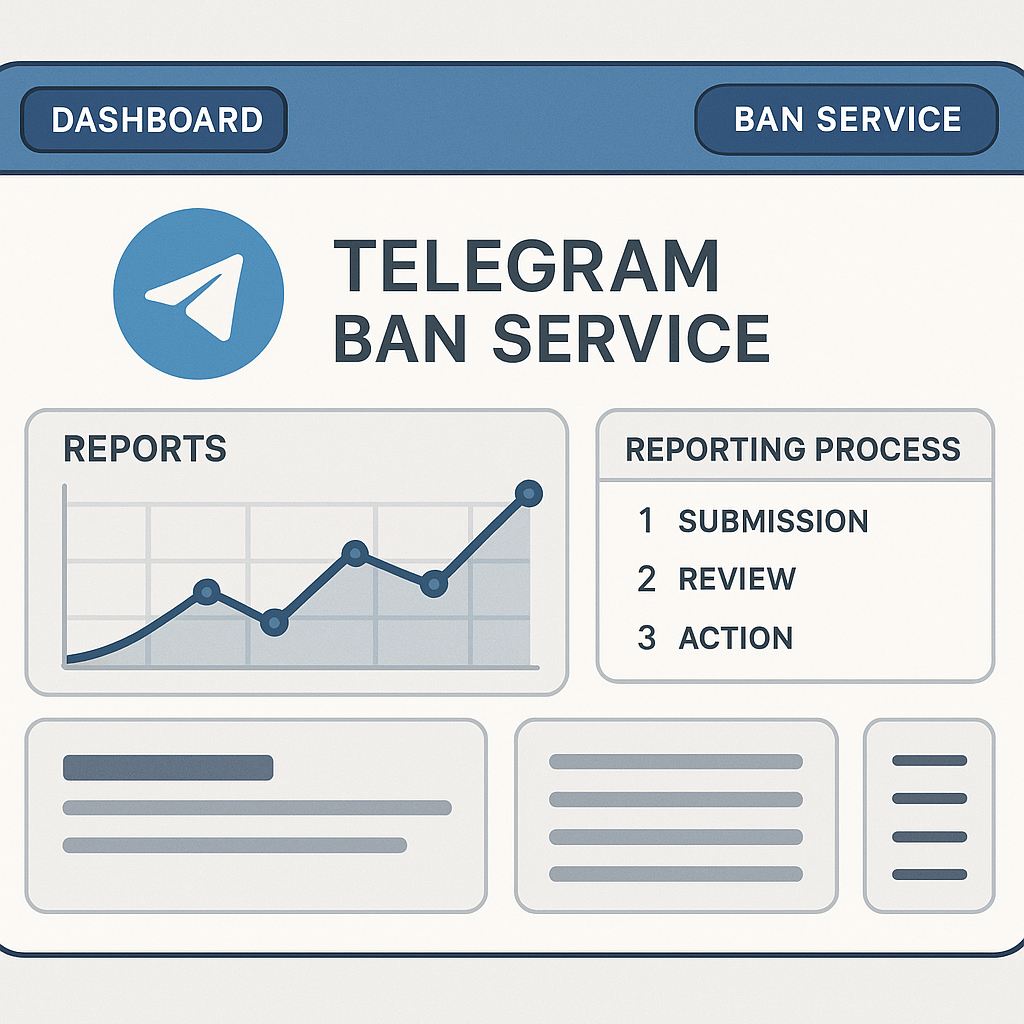
Here’s the typical flow of a Telegram ban service process in 2026:
| Step | Action | Result |
|---|---|---|
| 1 | Collect evidence of violations (spam, abuse, policy breaches) | Proof documented for reports |
| 2 | Mass-report through professional networks | Telegram moderation triggered |
| 3 | Telegram reviews violations | Ban decision within 24–48h |
| 4 | Refund guarantee applied if no ban | Client safe from risk |
Risks and Policies Around Ban Services
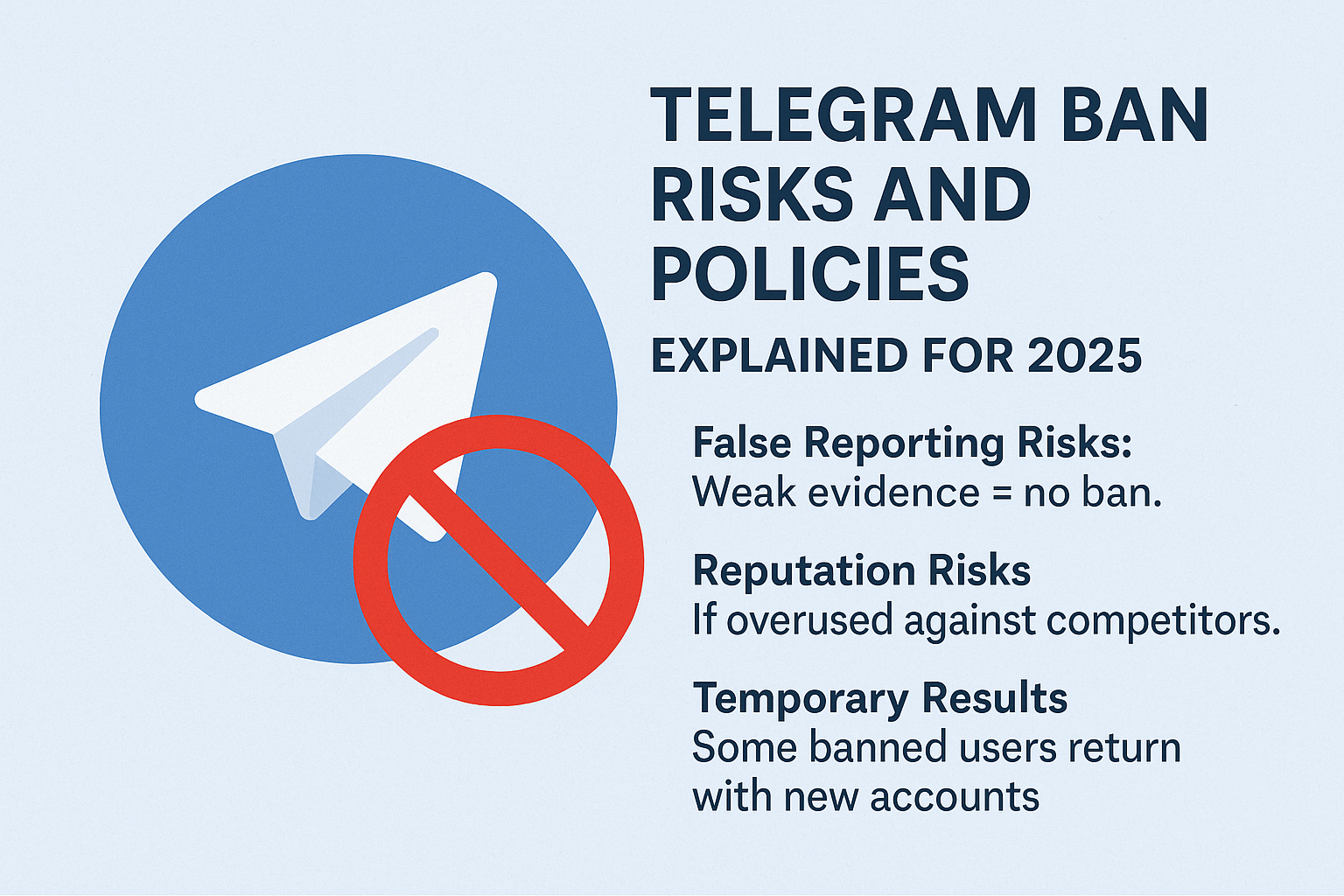
Although effective, Telegram ban reporting services come with risks:
- False reporting risks: weak evidence = no ban.
- Reputation risks: if overused against competitors.
- Temporary results: some banned users return with new accounts.
Case Study: Banning a Competitor’s Spam Bot
In early 2026, a client approached us with a competitor’s bot that was spamming 10+ groups daily. Using our Telegram bot ban service, we collected evidence, submitted reports, and the bot was banned within 36 hours. The client’s group engagement increased by 42% after removal of spam interference.
Choosing a Reliable Telegram Ban Service
Not all providers are equal. A safe service must provide:
- Refund guarantees (e.g. 72-hour refund policy)
- Evidence-based reports with transparency
- Clear timelines (24–48h typical ban result)
- Discreet process to protect client identity
Best Practices for Using Ban Services
To minimize risks and maximize efficiency:
- Only target accounts/groups clearly violating Telegram’s rules.
- Keep screenshots and proof in advance.
- Use trusted providers offering guarantees.
- Don’t misuse ban services purely for competition.
Conclusion
Telegram Ban Services are powerful tools for businesses and individuals in 2026. Whether you need to ban a Telegram account, remove a group, take down a channel, or disable a spam bot, choosing a reliable provider with clear guarantees is critical. Used responsibly, these services protect your community, brand, and growth strategy.