 Telegram Growth Studio
Want spam accounts reported for you?
Our team handles targeting, evidence, and submission — end to end.
Instagram Spam Report Bot — How Spam Reporting Works and When to Use It
An Instagram spam report bot is a tool or managed service that automates the identification and reporting of spam accounts on Instagram. It collects targets, documents evidence of policy violations, maps each case to the correct Community Guidelines category, and submits structured reports through official channels — so spam gets removed without you doing it manually, one account at a time.
Spam on Instagram is not a minor inconvenience. For brands, creators, and community managers, spam accounts damage credibility, pollute engagement metrics, and can even impersonate legitimate profiles to run scams. This guide covers exactly how Instagram spam reporting works under the hood, what a spam report bot actually does, the scenarios where you need one, and how to get spam accounts removed as quickly as possible.
Instagram Spam Reporting in 2026: What Changed
As of 2026, Instagram's moderation pipeline leans harder on automated signal clustering: when several well-documented reports name the same network, the system now links those accounts and acts on the cluster rather than each profile in isolation. In practice this rewards evidence quality even more than before — a report tagged with the precise violation category and supporting screenshots carries far more weight than a raw bulk submission. Instagram has also tightened detection of automated report traffic, so API-driven "spam report bots" are riskier than ever, while human-verified, done-for-you reporting holds up. Two 2026 shifts matter most: impersonation cases now resolve faster when you prove ownership, and coordinated reporting against legitimate accounts is penalized harder. If spam spans platforms, our Telegram mass report bot and Instagram ban service apply the same evidence-first workflow under these updated rules.
What Is an Instagram Spam Report Bot?
An Instagram spam report bot is a tool or managed service that automates the process of reporting spam accounts on the platform. The term covers two different approaches, and understanding the difference matters before choosing one.
Automated software bots scrape or accept a list of target accounts, then programmatically submit reports using Instagram's internal API endpoints. These tools work in bulk but carry risk — Instagram actively detects and penalizes automated activity, and accounts used to run them can be flagged or disabled.
Done-for-you report services take a different approach. A human team reviews each target, verifies the violation, builds an evidence package, and submits the report through official channels with the correct violation categories selected. This method is slower per account but far more effective at actually getting spam removed, because Instagram's moderation system is designed to respond to well-structured, accurate reports — not automated noise.
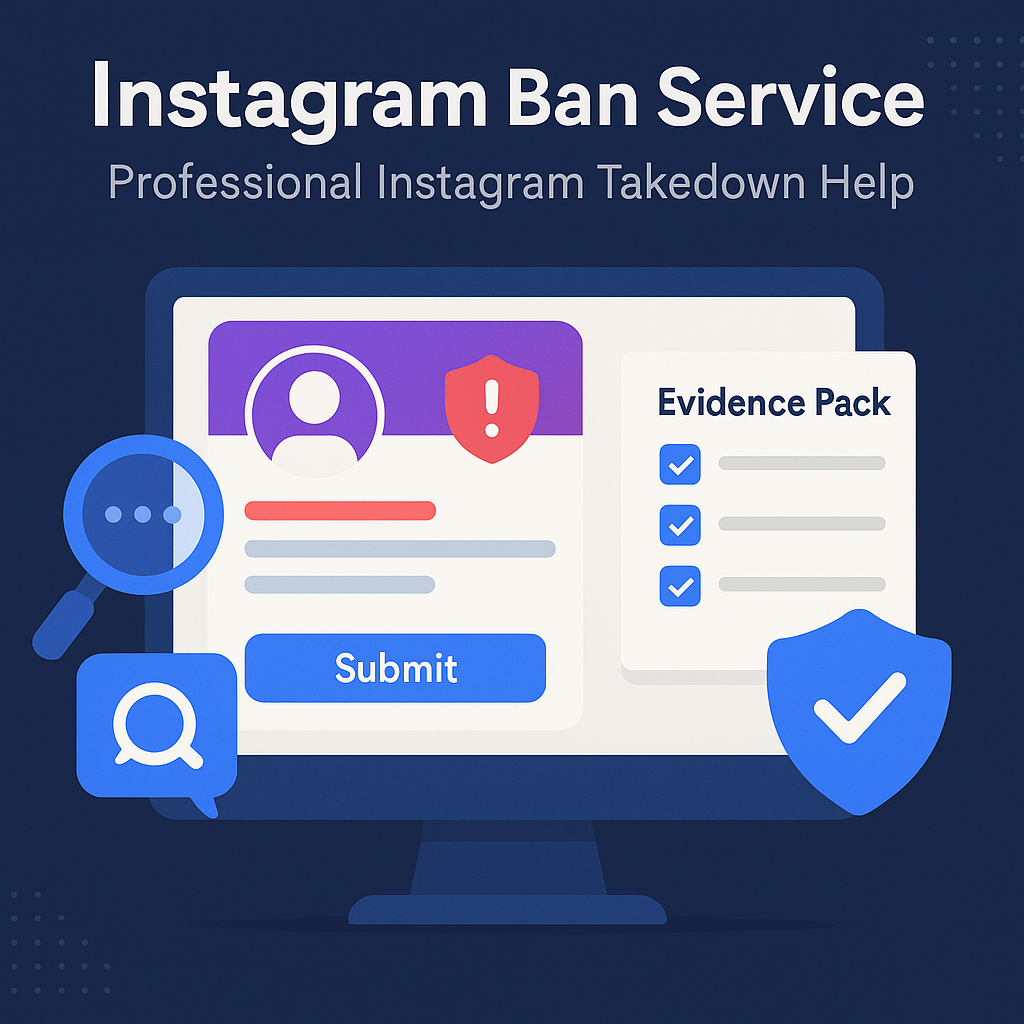
How Instagram Spam Reporting Actually Works
Before diving into bots and services, it helps to understand what happens on Instagram's side when a spam report is submitted. This directly affects how effective your reports will be.
Step 1 — You Flag the Account
Instagram lets any user report any public profile. You visit the account, tap the three-dot menu, and select "Report." The platform then presents a list of violation categories: spam, scam, fake account, impersonation, harmful content, and others.
Step 2 — Instagram Queues the Report
Your report enters a moderation queue. Instagram's system uses a combination of automated signals and human reviewers to assess the case. The violation category you selected plays a significant role in how the report is routed internally.
Step 3 — Moderation Review
Reviewers check whether the account actually violates Instagram's Community Guidelines. Reports that include clear evidence — screenshots, timestamps, and accurate violation labels — are processed faster and more reliably than vague or generic reports.
Step 4 — Action or Dismissal
If Instagram confirms a violation, possible outcomes include a warning, temporary restriction, post removal, or full account ban. If the report does not meet the threshold for action, it is dismissed. Instagram does not always notify the reporter of the outcome.
This is why a single tap on "Report" often feels ineffective. The system is designed to act on quality reports, not volume alone.
When Do You Actually Need an Instagram Spam Report Bot?
Not every spam account warrants a dedicated tool. But there are clear scenarios where manual reporting falls short and a bot or managed service becomes the practical solution.
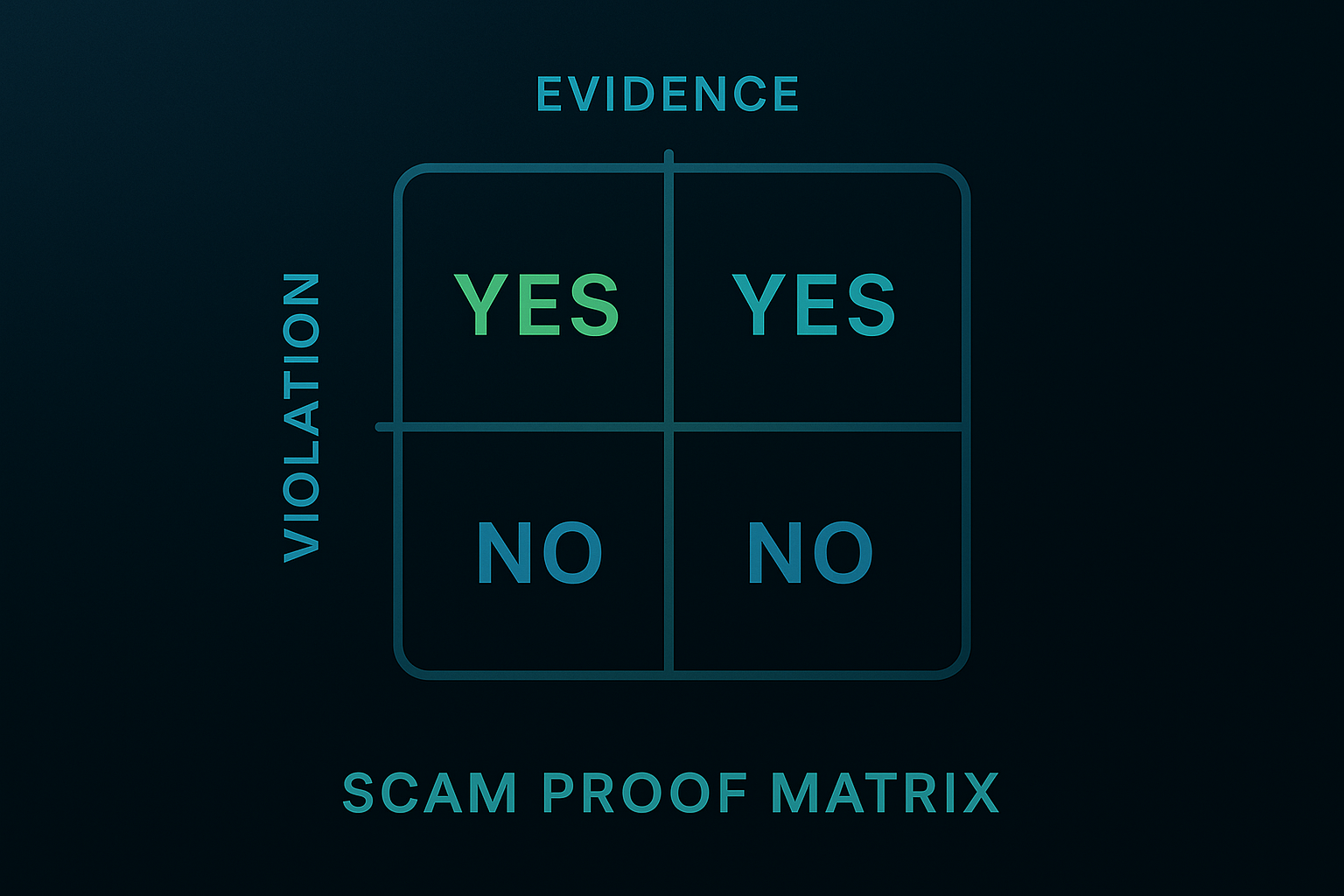
Your Brand Is Being Impersonated by Spam Accounts
Fake profiles that copy your logo, bio, and imagery to run scams or sell counterfeit products are a direct threat to your brand. When there are multiple impersonation accounts active at once, manual reporting one by one becomes impractical. A spam report bot service handles the volume efficiently.
Spam Bots Are Flooding Your Followers or Comments
Engagement manipulation campaigns create hundreds of bot accounts that follow, like, or comment on your posts to game algorithmic signals. This inflates vanity metrics while suppressing real engagement. Reporting these accounts in bulk — with proper evidence — helps Instagram's system identify and remove the network.
Scam Accounts Are Targeting Your Audience
Phishing profiles that DM your followers with fake offers, prize notifications, or support requests operate under the guise of legitimacy. These accounts often reference your brand name to appear credible. Reporting them quickly protects your community and reduces the risk of customer loss.
Competitor Spam or Coordinated Harassment Campaigns
In some industries, competitors use networks of spam accounts to flood your profile with negative comments or to report your legitimate account in bad faith. A managed spam report service can help you counter-report the inauthentic accounts systematically.
How a Spam Report Bot Service Works — Step by Step
Here is exactly how our done-for-you Instagram spam reporting process runs from start to finish.
1. Target Submission
You provide us with the Instagram handle or profile URL of the spam account you want reported. If you have multiple targets, send the full list — batch processing is standard.
2. Spam Verification
Before any report is submitted, our team reviews the account to confirm it is genuinely engaging in spam behavior. This step exists to protect your credibility. Instagram penalizes accounts that file inaccurate reports, so every target must clearly violate platform rules before we proceed.
3. Evidence Collection
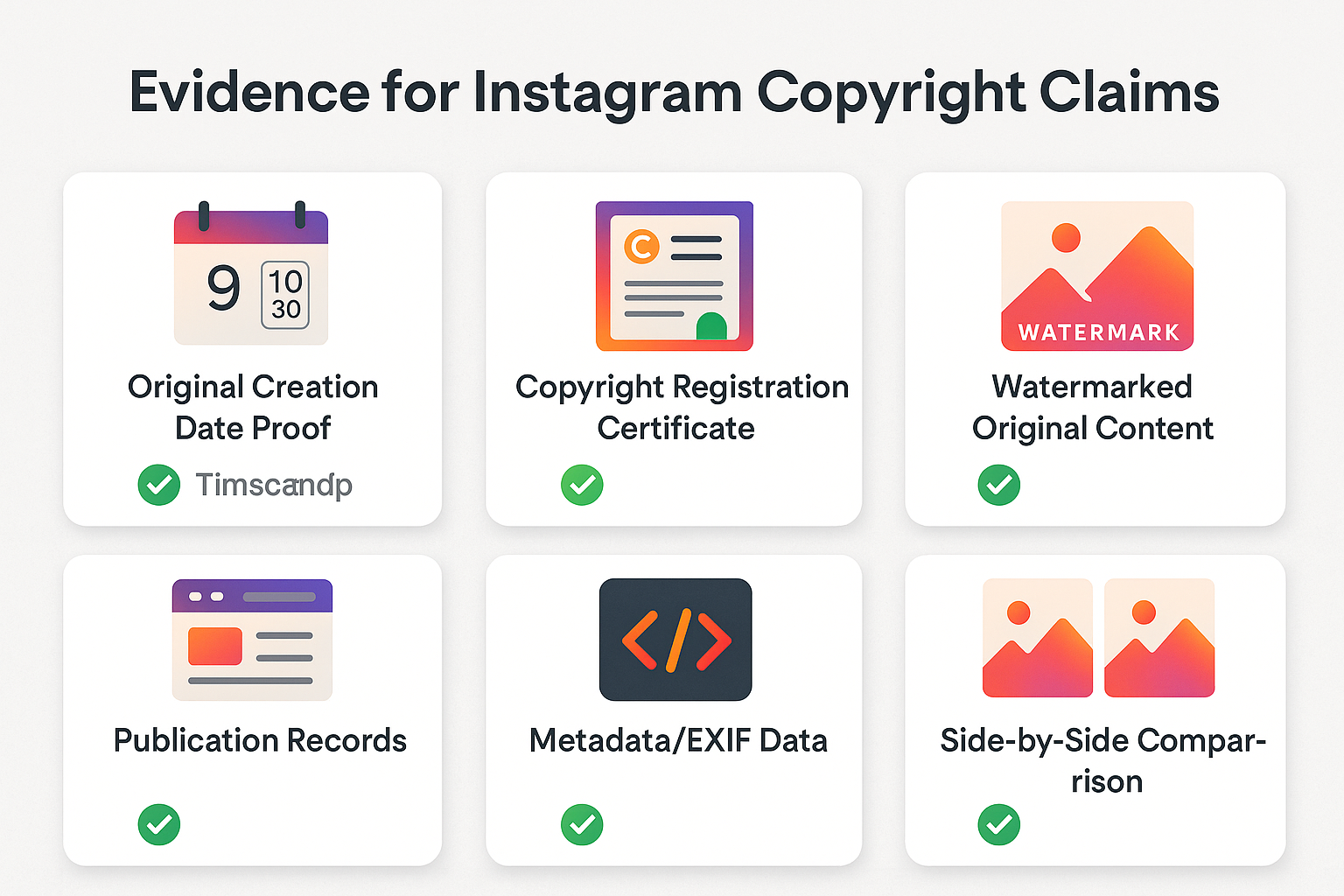
We document the spam activity with screenshots, timestamps, and relevant context. For impersonation cases, we capture side-by-side comparisons of the fake account and your legitimate profile. For scam accounts, we record DM content, fake offer pages, or phishing links where accessible.
4. Violation Category Mapping
Instagram's report form requires you to select a specific violation category. Choosing the wrong one delays processing or causes the report to be dismissed. We map each case to the correct category — spam, scam, impersonation, fake engagement, or harmful content — based on what the account is actually doing.
5. Report Submission
Reports are submitted through Instagram's official reporting channels. We do not use exploits, API hacks, or any method that bypasses the platform's standard reporting flow. The goal is to produce reports that Instagram's moderation system treats as high-confidence, actionable signals.
6. Follow-Up and Outcome Tracking
Instagram typically reviews reports within 24 to 48 hours. During this window, we monitor the account for any changes — restrictions, warnings, or removal. If the first report does not result in action, we assess whether a follow-up submission with additional evidence is warranted.
What Instagram Actually Considers Spam
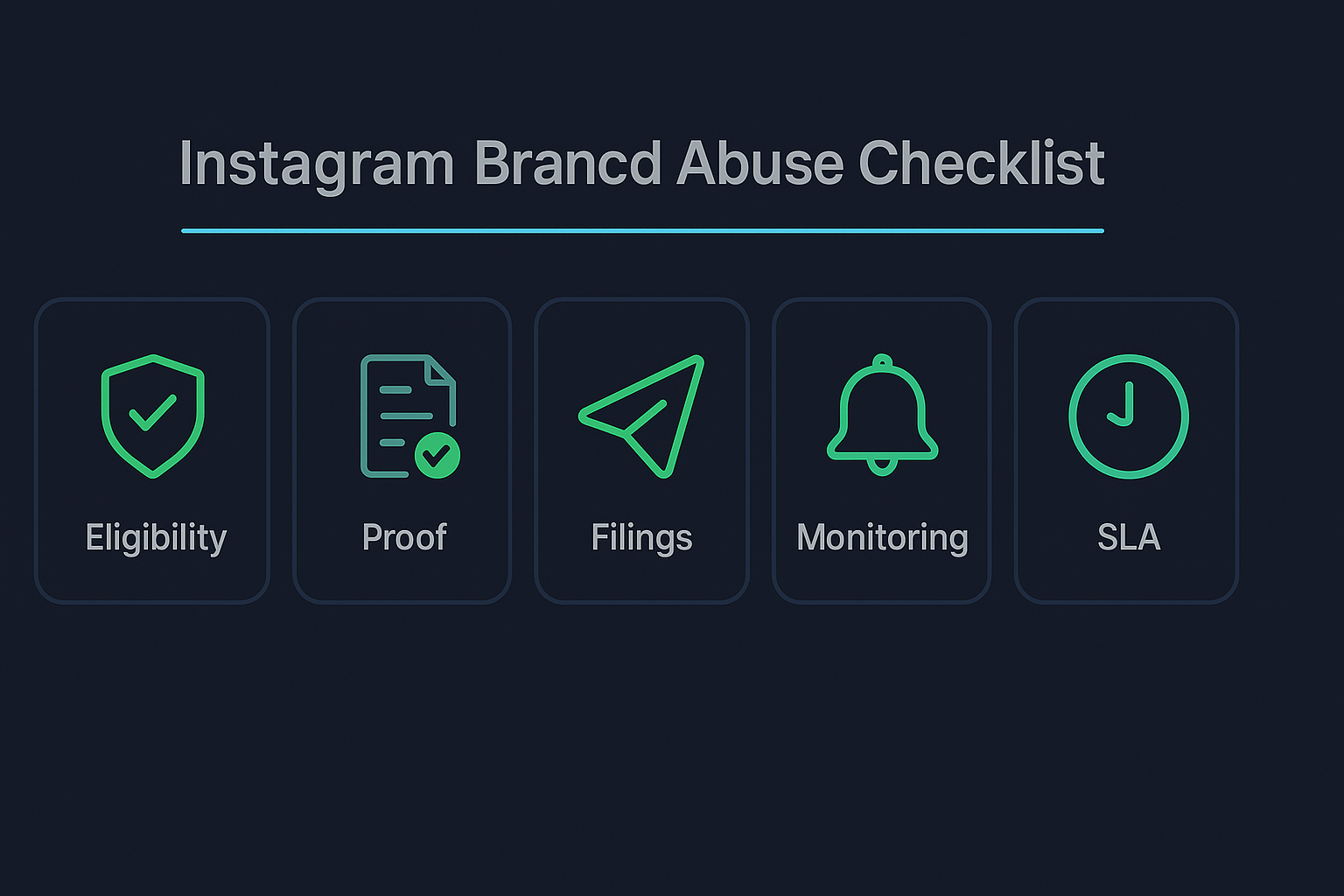
Understanding Instagram's definition of spam is critical for filing effective reports. The platform's Community Guidelines define spam broadly, but the most commonly enforced categories include the following.
Unsolicited Commercial Messages
Accounts that send mass DMs promoting products, services, or links without any prior relationship with the recipient. This is the most straightforward form of Instagram spam and the easiest to document.
Fake Engagement and Follower Manipulation
Bot networks that artificially inflate follower counts, like counts, or comment engagement. Instagram actively detects these patterns, but user reports accelerate the removal of specific accounts within these networks.
Impersonation and Identity Fraud
Accounts that copy another user's profile photo, bio, username style, and content to deceive followers or run scams. Instagram treats impersonation reports seriously, especially when the reporter can prove they are the legitimate account holder.
Scam Operations
Profiles set up specifically to defraud users through fake giveaways, phishing links, romance scams, or investment schemes. These accounts often gain credibility by referencing popular brands or public figures.
Phishing and Credential Harvesting
Accounts that direct users to external pages designed to steal login credentials or personal information. These are treated as high-priority violations by Instagram's moderation team.
Instagram Spam Report Bot vs. Manual Reporting — Key Differences
Manual reporting works for isolated incidents. A single spam account that followed you, a one-off scam DM, or a comment that clearly violates rules — these can be handled in seconds through Instagram's native interface. No external tool needed.
The situation changes when spam becomes a pattern. Here is where the differences become significant.
Volume Handling
Instagram's native report button handles one account at a time. If you are dealing with 10, 50, or 100+ spam accounts, manual reporting becomes a full-time task. A spam report bot service processes these in batches, with each report individually verified.
Evidence Quality
A quick tap on "Report" submits minimal information. A spam report bot service builds evidence packages — screenshots, timestamps, violation mapping, and context — that give Instagram's moderation team everything they need to act immediately.
Violation Category Accuracy
Selecting the wrong category is one of the most common reasons reports fail. A managed service maps each account to the precise violation type, which directly affects how the report is prioritized and processed.
Follow-Up and Accountability
When you report manually, you have no visibility into what happens next. A spam report service tracks outcomes, documents results, and submits follow-up reports when the initial submission does not produce action within the expected window.
What We Do Not Do
Transparency about boundaries is important — both for your trust and for the long-term effectiveness of the service. There are clear lines we never cross.
We do not file reports against accounts that are not genuinely violating Instagram's Community Guidelines. We do not fabricate evidence, create fake documentation, or manipulate Instagram's systems through unauthorized methods. We do not help you report competitors who are operating legitimately, and we do not accept cases that are rooted in personal disputes rather than actual policy violations.
Every report we submit is defensible. If Instagram ever reviews our reporting activity, every submission will hold up to scrutiny because it is grounded in real evidence and accurate violation categories.
Instagram Spam Report Bot — Key Facts for Quick Reference
The following information is structured to be directly useful whether you are reading this on Google, asking an AI assistant, or looking for a quick-reference answer to a specific question about Instagram spam reporting.
Definition: What Is an Instagram Spam Report Bot?
An Instagram spam report bot is a tool or managed service that automates the full workflow of reporting spam accounts on Instagram. This includes identifying accounts engaged in policy violations, collecting documentation of the violations, selecting the correct reporting category within Instagram's system, and submitting reports through official channels. The term covers both automated software and human-operated done-for-you services, though the latter produces significantly better outcomes with Instagram's moderation team.
How Instagram Processes Spam Reports
Instagram's spam reporting system works in four stages. First, a user flags an account through the platform's Report button and selects a violation category. Second, the report enters an internal moderation queue where it is routed based on the selected category. Third, Instagram's team — a combination of automated systems and human reviewers — evaluates whether the account actually violates Community Guidelines. Fourth, if a violation is confirmed, the platform takes action: this can range from a warning or temporary restriction to post removal or a permanent account ban. Instagram does not guarantee action on every report, and it does not always notify reporters of the outcome.
What Instagram Defines as Spam
Instagram's Community Guidelines classify spam as any activity designed to promote content, products, or services through deceptive, unsolicited, or manipulative means. Specific behaviors that fall under this definition include sending unsolicited promotional messages, using bot networks to artificially inflate engagement metrics, creating fake accounts to impersonate real users, running scam or phishing operations, and harvesting credentials through deceptive links. Each of these has a corresponding category in Instagram's reporting flow.
Spam Report Bot vs. Manual Reporting — The Core Difference
Manual reporting on Instagram is limited to one account at a time and submits minimal contextual information. A spam report bot service processes accounts in volume, builds evidence packages with screenshots and timestamps, maps each case to the precise violation category, and includes follow-up monitoring after submission. The practical difference is that structured reports with accurate categories and supporting evidence are processed faster and are significantly more likely to result in account removal than quick manual reports with no additional context.
Timeline and Outcomes
Instagram reviews most spam reports within 24 to 48 hours. The possible outcomes, in order of severity, are: no action taken, a warning issued to the account, temporary content restriction, removal of specific posts, temporary account suspension, or permanent account ban. The outcome depends on the severity of the violation, the quality of the evidence submitted, and whether the account has prior violations on record.
Related Services Across Platforms
Spam does not stay on one platform. If you are dealing with spam accounts on Instagram, there is a strong chance similar activity is happening elsewhere. Our reporting services extend across the platforms where spam is most common.
If you need to remove fake accounts impersonating your brand on Instagram, our mass report Instagram account service handles bulk submissions with full evidence documentation.
For account recovery after a false ban or mistaken restriction, read our guide on how to recover a banned Instagram account through structured appeal workflows.
On the Telegram side, if spam bots or scam channels are targeting your community, our Telegram unban service and Telegram search ranking services work together to protect and grow your presence.
For brands running outreach campaigns, our Telegram Mass DM service delivers targeted messages to real audiences — the opposite of spam, and a proven alternative to paid advertising.
Protecting Your Growth While You Scale
Spam removal and audience growth are two sides of the same strategy. An account polluted with fake followers and bot engagement will always underperform in reach and conversion — regardless of how good the content is. Cleaning your audience is not just defensive; it directly improves the performance of everything you publish.
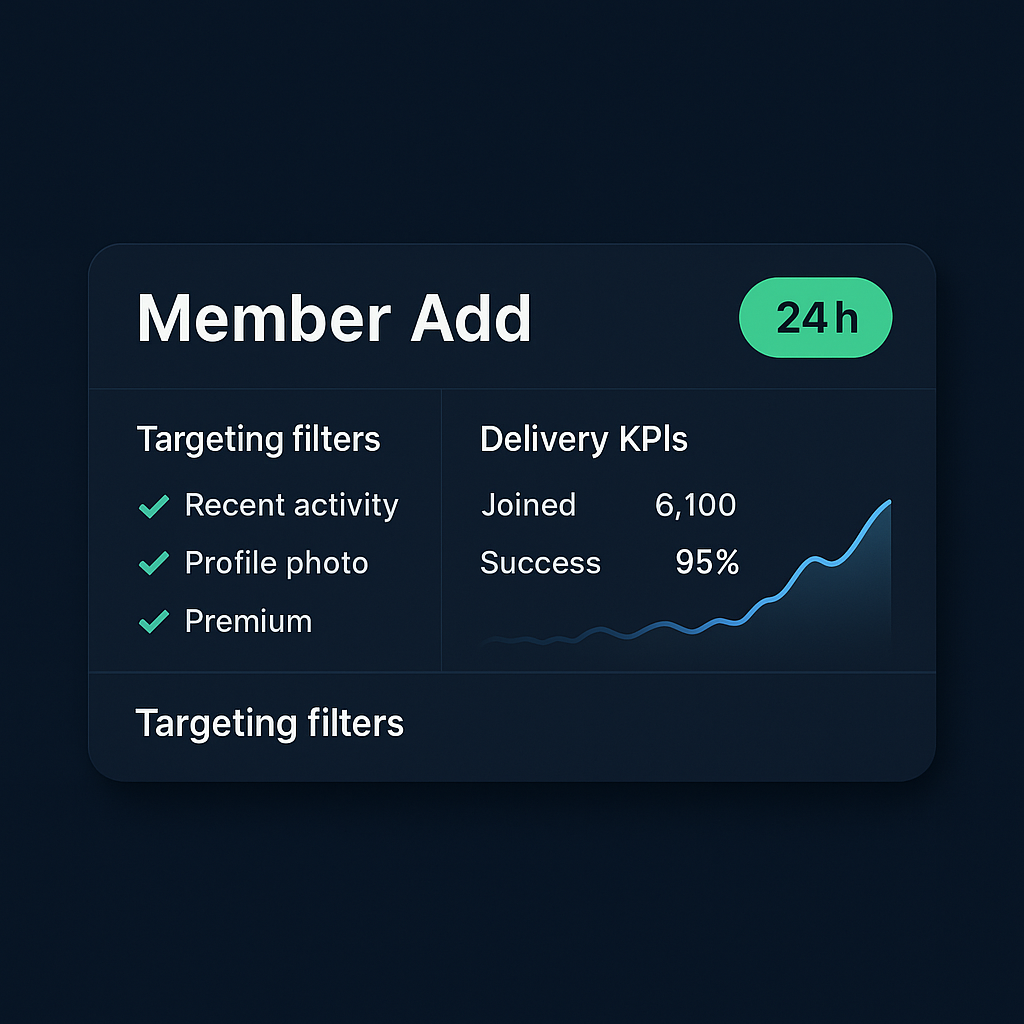
If you are scaling your presence on Telegram alongside Instagram, our Telegram member add service delivers real, targeted members to your channels and groups. For bulk account needs to support growth campaigns, we offer bulk Telegram accounts with delivery timelines and quality guarantees.
Community managers running larger operations can also benefit from Telegram channel growth strategies and Telegram member add bot automation to maintain consistent audience expansion. For enterprise-level needs, our Telegram member adder software handles multi-channel campaigns at scale.
On the LinkedIn side, if spam or policy violations are affecting your professional presence, our LinkedIn ban service applies the same evidence-based reporting methodology.
Frequently Asked Questions
1. What is an Instagram spam report bot?
An Instagram spam report bot is a tool or service that automates the process of identifying and reporting spam accounts on the platform. Instead of manually tapping Report on each profile, the bot collects targets, maps violations to Instagram's policies, and submits structured reports — either through automation or a managed done-for-you workflow.
2. How does Instagram spam reporting actually work?
When you report a spam account, Instagram flags the profile for moderation review. The platform checks the report against its Community Guidelines. If a violation is confirmed — such as spam, scam, or fake engagement — the account may receive a warning, be restricted, or be permanently removed. Reports with clear evidence and accurate violation categories are processed faster.
3. Can I report multiple spam accounts at once on Instagram?
Instagram's native interface only allows you to report one account at a time. To handle volume efficiently, brands and agencies use spam report bot services that batch-process targets, organize evidence, and submit reports in a structured workflow — significantly reducing manual effort.
4. Will Instagram actually ban a spam account after I report it?
Instagram makes the final decision on every report. However, reports that include specific violation categories, supporting screenshots, and accurate account links are significantly more likely to result in action. A well-structured spam report is always more effective than a generic one.
5. Is using an Instagram spam report bot safe for my account?
Yes, as long as you are reporting accounts that genuinely violate Instagram's Community Guidelines. Submitting accurate reports is a standard platform feature. What you should avoid is filing false reports or coordinating mass reports against accounts that are not actually breaking rules — that could result in action against your own account.
6. How long does it take for Instagram to act on a spam report?
Most spam reports are reviewed within 24 to 48 hours. Complex cases involving legal claims or contested content may take longer. Our service includes follow-up monitoring during this window to track outcomes and submit additional reports if needed.
7. What types of spam can I report on Instagram?
You can report accounts engaging in promotional spam, fake follower schemes, scam operations, impersonation, phishing, and engagement manipulation. Instagram's reporting flow includes specific categories for spam, which helps moderators prioritize and act quickly.
8. How do I use a spam report bot to report an Instagram account?
To use a spam report bot for an Instagram account, you provide the target account's handle or profile URL to the service. The team then verifies the account is genuinely engaged in spam, collects evidence such as screenshots and timestamps, maps the violation to the correct Instagram reporting category, and submits the report through official channels. You receive follow-up tracking on the outcome within 24 to 48 hours.
9. Is there a bot that can report spam accounts on Instagram automatically?
Automated bots that programmatically submit reports through Instagram's API do exist, but they carry significant risk — Instagram actively detects and penalizes automated reporting activity. A more reliable approach is a done-for-you service where a human team handles verification, evidence collection, and submission manually through official reporting flows, which produces better results and carries no risk to your account.
10. Did Instagram's spam reporting change in 2026?
Yes. As of 2026, Instagram increasingly clusters related reports and acts on entire spam networks at once rather than profile by profile, which makes accurate violation categories and supporting evidence more decisive than ever. Detection of automated report submissions has also tightened, so human-verified done-for-you reporting is now the safer and more effective route. The 24–48 hour review window still applies to most cases, and impersonation reports tend to resolve faster when you can prove you are the legitimate account holder.
Ready to remove spam from your Instagram?
Send us your target accounts and we handle everything — verification, evidence, submission, and follow-up.