 Telegram Growth Studio
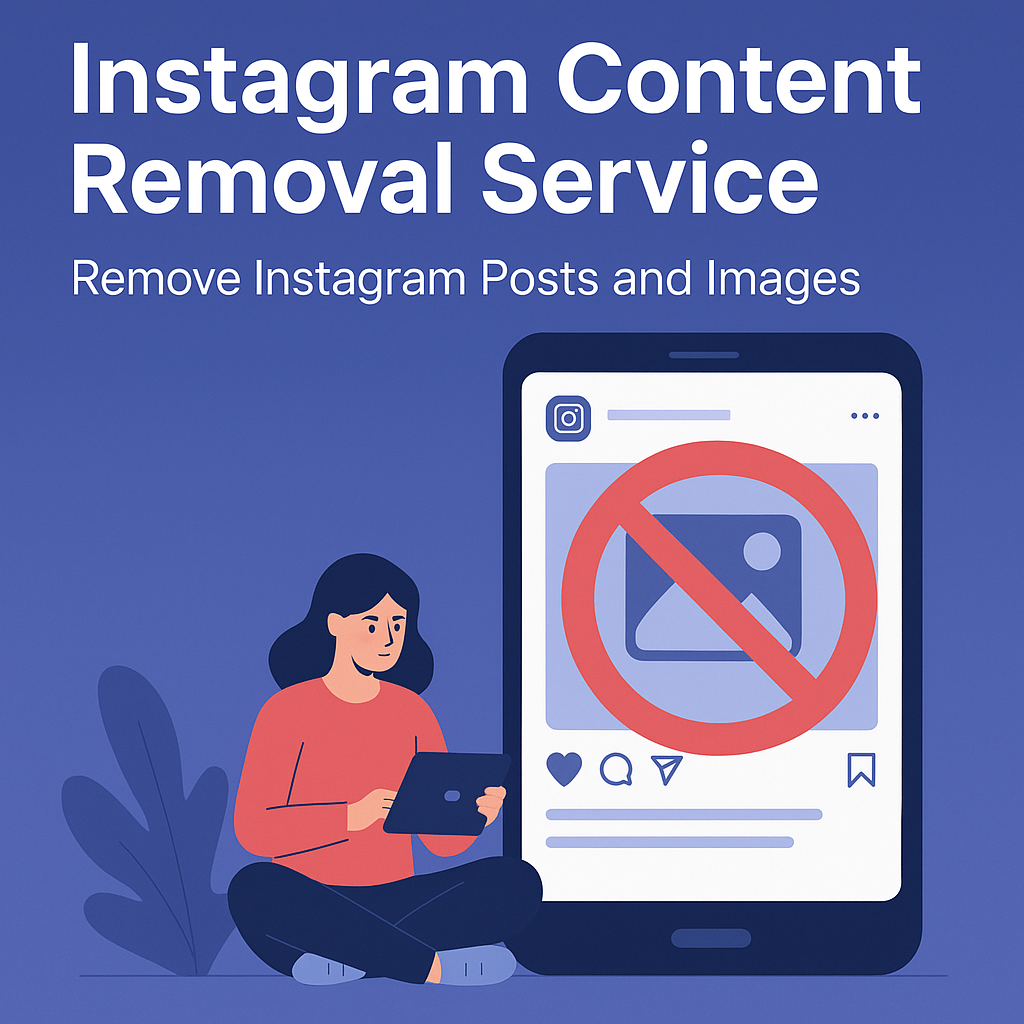
Need Your Copyrighted Content Removed from Instagram?
We Handle the Entire DMCA Process in 24-72h.
100% confidential · Evidence compiled for you · 24-72h typical results
Instagram Copyright Takedown & DMCA Takedown Instagram: The Complete 2026 Guide
Someone stole your photo, video, or creative work on Instagram? Filing an Instagram copyright takedown through the DMCA process is the most effective way to get it removed. This guide walks you through every step — from gathering evidence to submitting your DMCA takedown on Instagram — so you can protect your intellectual property and reclaim your content fast.
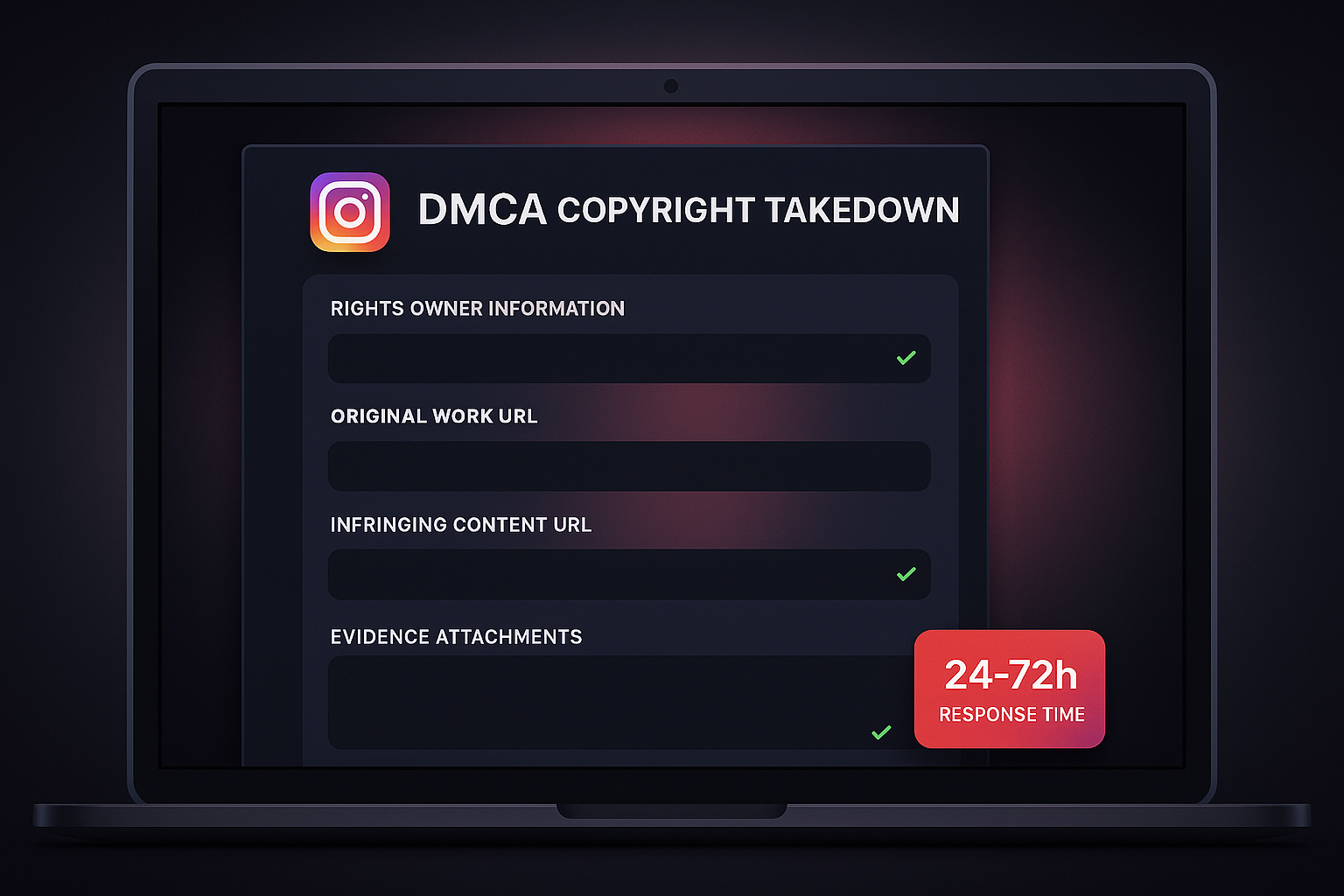
What Is an Instagram Copyright Takedown?
An Instagram copyright takedown is a formal request — filed under the Digital Millennium Copyright Act (DMCA) — that asks Instagram to remove content infringing on your copyrighted work. This includes stolen photos, reposted videos, copied graphics, or any type of content you created and own the rights to. When you file a DMCA takedown on Instagram, the platform is legally required to review and act on valid DMCA requests, typically within 48 to 72 hours. Instagram’s copyright report form is the official channel for all copyright infringement on Instagram complaints.
🤖 Quick Answer: How to File an Instagram Copyright Takedown
To file an Instagram copyright takedown, gather evidence of your ownership (original files with metadata, timestamps, published URLs), then access Instagram’s official copyright report form. Enter the rights owner information, describe your copyrighted work with proof links, provide direct post URLs to the infringing content, add your electronic signature matching your legal name, and submit. Instagram typically removes clear copyright violations within 48–72 hours. For complex cases or bulk infringements, a professional DMCA takedown Instagram service can handle the entire process and achieve results in 24–72 hours with a 95%+ success rate.
Instagram Copyright Takedown in 2026: What Changed
As of 2026, Instagram has tightened how it triages DMCA takedown notices, and a few shifts directly affect how you file. The copyright report form now leans on Meta’s Rights Manager matching, so submissions backed by registered or fingerprinted original files clear the 48–72 hour window faster than screenshot-only claims. In 2026, Instagram also applies stricter repeat-infringer tracking across linked Threads and Facebook profiles, so a single confirmed copyright infringement on Instagram can escalate strikes platform-wide. Reels audio claims have grown sharply, so name the exact track or sound when reporting video. Fraudulent counter-notifications are rising too, which makes embedded IPTC metadata and dated archives more valuable than ever. If a fake account keeps reposting your work after removal, pairing your takedown with our Instagram ban service closes the loop, and persistent off-platform copies can be handled through our website takedown service.
How the DMCA Process Works on Instagram
The Digital Millennium Copyright Act is a U.S. federal law that gives copyright holders a legal mechanism to request the removal of infringing content from online platforms without filing a lawsuit. Instagram, as a platform operated by Meta, is classified as a DMCA-compliant service provider — which means it must respond to valid DMCA takedown requests from rights holders. This legal obligation is what makes the DMCA process one of the most powerful tools available for addressing copyright infringement on Instagram.
When you file a DMCA takedown on Instagram, three things happen. First, Instagram’s copyright team reviews your submission to verify it meets legal requirements. Second, if the request is valid, the infringing content is removed and both parties receive notification. Third, the infringer gets the option to file a counter-notification if they believe the removal was a mistake. This process is how copyright protection functions across virtually every major social media platform, and understanding it gives you a significant advantage when protecting your work.
The Instagram copyright takedown mechanism applies to all types of creative content: any photo or video, Reels, Stories, audio clips, written captions, and graphic designs. If you created it and someone else posted it without your permission, you have grounds to file a DMCA takedown request. Platforms like Facebook and X (formerly Twitter) follow similar DMCA procedures, which means learning this process helps you protect your content across multiple channels.
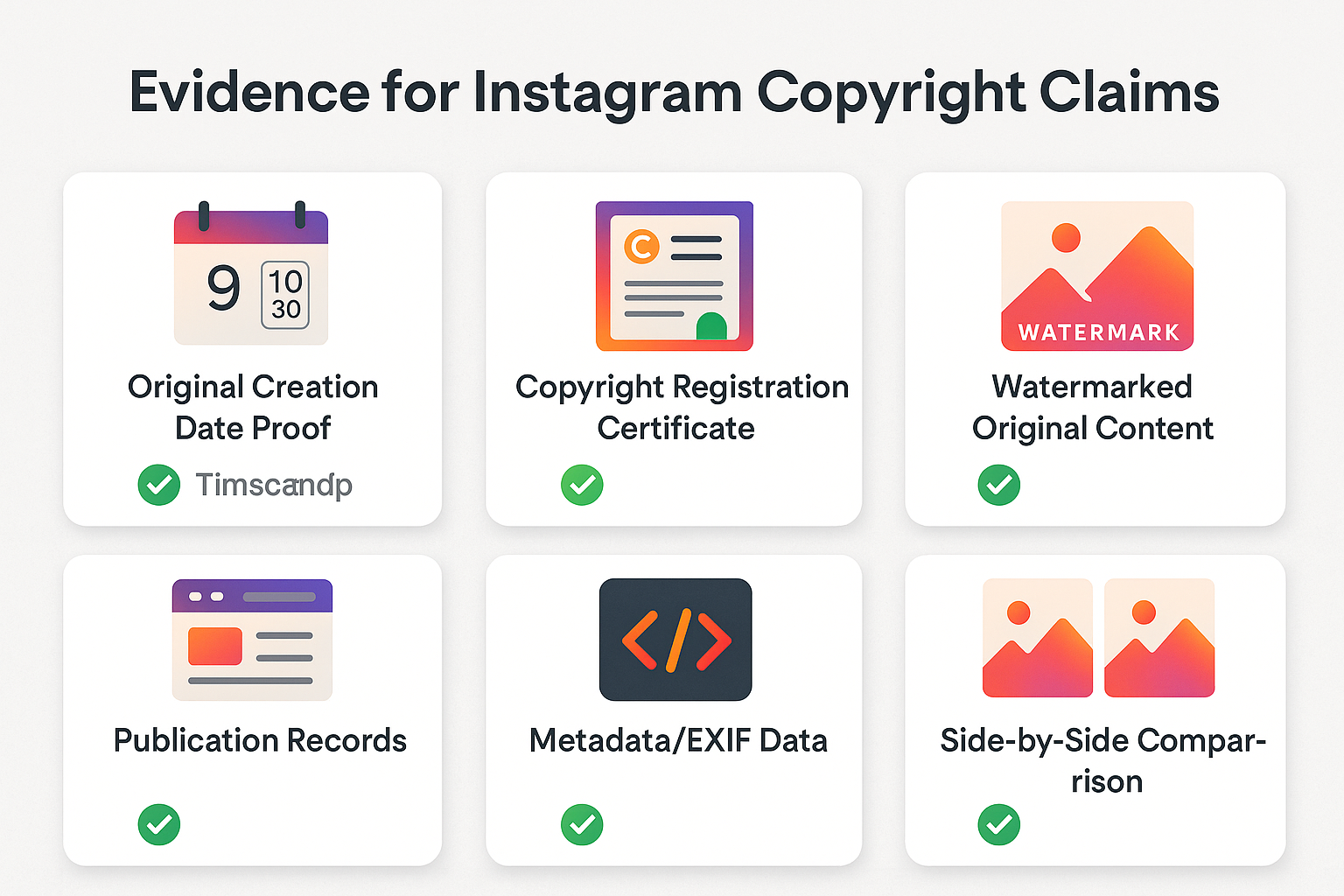
Evidence Checklist for Instagram Copyright Takedown
Strong evidence is the single biggest factor determining whether your Instagram copyright takedown succeeds quickly or gets stuck in back-and-forth communication. Instagram’s review team needs to verify two things: that you own the copyrighted work, and that the reported content actually infringes your rights. Incomplete documentation is the number-one reason takedown request submissions get delayed or denied.
Primary Proof of Ownership
Original files serve as your strongest evidence in any DMCA takedown Instagram case. RAW photo files, unedited video footage, source design files (PSD, AI, FIGMA), or draft versions that predate the infringing post establish clear ownership. Metadata embedded in digital files — creation dates, camera model, GPS coordinates, authorship details — provides technical proof that’s extremely difficult to fabricate. If you have copyright registration certificates, include them as well, though registration is not required to file a DMCA takedown under the Digital Millennium Copyright Act.
Evidence of Infringement
Document the unauthorized content thoroughly before filing your takedown request. Take multiple screenshots showing the infringing post, the account name, the post date, and the full URL. If the content includes your watermark or any identifying markers, capture those details clearly. For video content, note specific timestamps showing copied segments. Always record the infringer’s account name, follower count, and any monetization indicators — this additional information helps Instagram assess the severity of the violation and prioritize your case.
Your Complete Evidence Checklist
Before submitting your Instagram copyright takedown, confirm you have these items ready: original files with embedded metadata showing creation date and authorship, screenshots of your original published content with visible timestamps, direct URLs to your original work (your website, portfolio, or Instagram accounts where you first posted), screenshots of the infringing content showing the account name, post date, and full URL, a description explaining how the content was used without your permission, and your legal name matching the electronic signature you’ll use on the form. Having everything prepared before you access the copyright report form dramatically speeds up the submission process.
Step-by-Step: How to File a DMCA Takedown Request on Instagram
Filing a DMCA takedown on Instagram follows a specific step by step process through the platform’s official copyright report form. Whether this is your first DMCA takedown Instagram submission or you’ve filed before, following each step exactly as outlined below maximizes your chances of a successful outcome.
Step 1: Access the Copyright Report Form
Navigate to Instagram’s official copyright report form. This dedicated form is different from general support channels and is the proper pathway for all copyright infringement on Instagram reports. You can access it directly through the Help Center under intellectual property reporting, or by searching “Instagram copyright report form” in your browser. Avoid using the generic three-dot menu report option for copyright issues — it routes to content moderation teams rather than the specialized copyright team that handles DMCA requests.
Step 2: Enter Rights Owner Information
Provide the full legal name of the copyright owner. This can be your personal name or the name of the organization you represent as an authorized agent. Instagram asks where you’re asserting rights and which type of content best describes the copyrighted work — select the option that most accurately matches your photo, video, graphic, or other creative work. Accuracy here prevents delays caused by misclassified reports.
Step 3: Describe Your Copyrighted Work
Provide a link to your original copyrighted work — this can be a URL from your website, Facebook Page, portfolio, or anywhere the original is published. In the description field, be specific: “Original sunset photograph of Santa Monica Pier taken on March 15, 2026, posted to @yourusername on March 16, 2026” is far more effective than “someone stole my photo.” The more precise your description, the faster Instagram’s team can verify your ownership claim and process your Instagram copyright takedown.
Step 4: Identify the Infringing Content
Select the type of content you’re reporting — photo or video or post. Then provide direct URLs linking to each specific piece of infringing content on Instagram. You need the actual post URL, not just a profile page link. Open each infringing post in a web browser, copy the complete URL from the address bar, and paste it into the form. Each individual report should cover one type of copyrighted work, so if you have multiple different works being infringed, submit separate reports for each.
Step 5: Sign and Submit
Your electronic signature must match your full legal name exactly. This signature certifies three legal declarations: you have a good faith belief that the use is unauthorized, the information in your notice is accurate, and you face perjury penalties if you knowingly submit false information. These declarations carry real legal weight — submitting false or misleading DMCA requests can result in liability for damages and attorney fees. Review everything carefully, then submit. You’ll receive a confirmation email with a unique report number. Save this number for tracking follow-up communication.
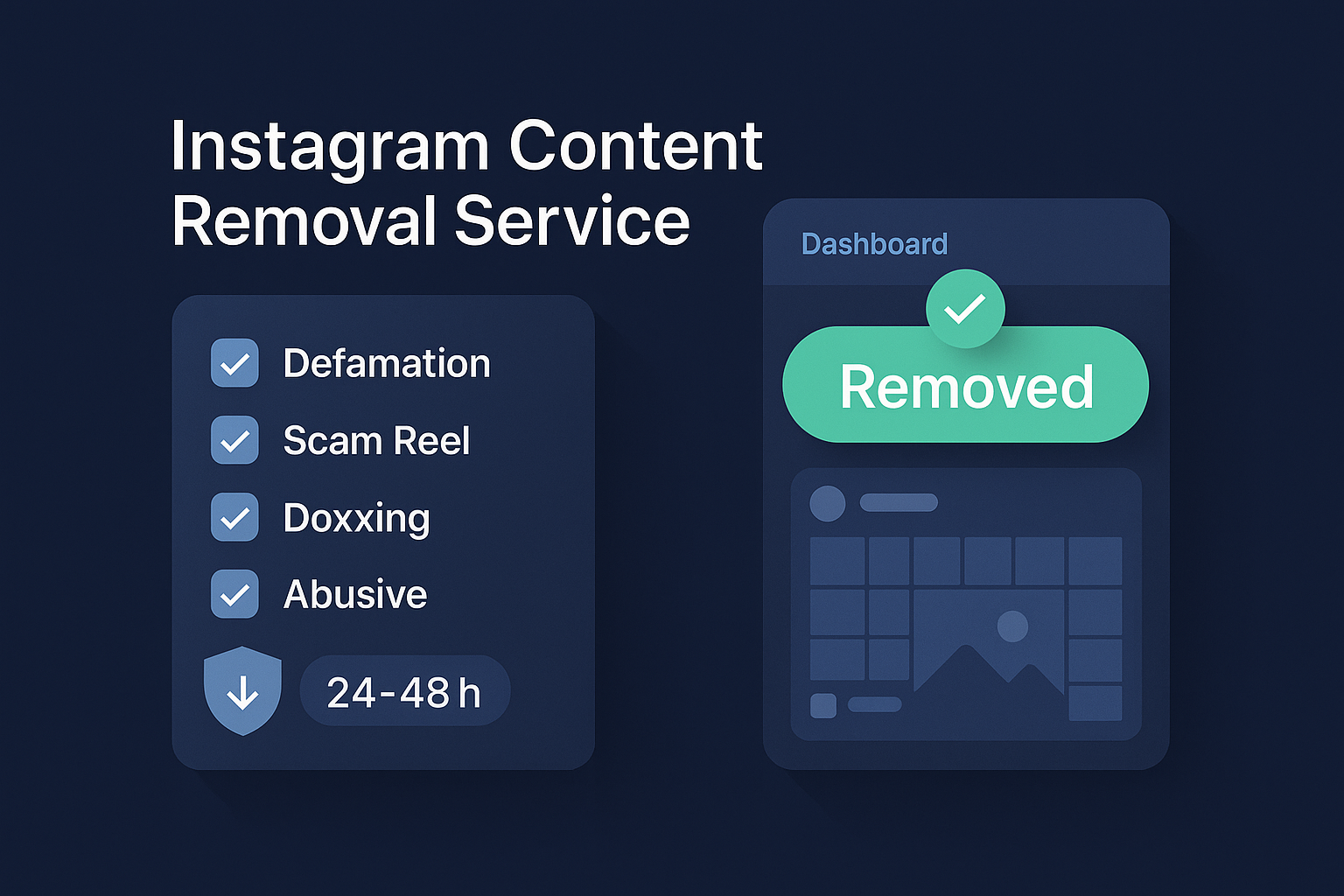
Too complex? Let our experts handle every step for you.
Free evaluation · Evidence compiled for you · 24-72h results
Instagram DMCA Removal Timeline
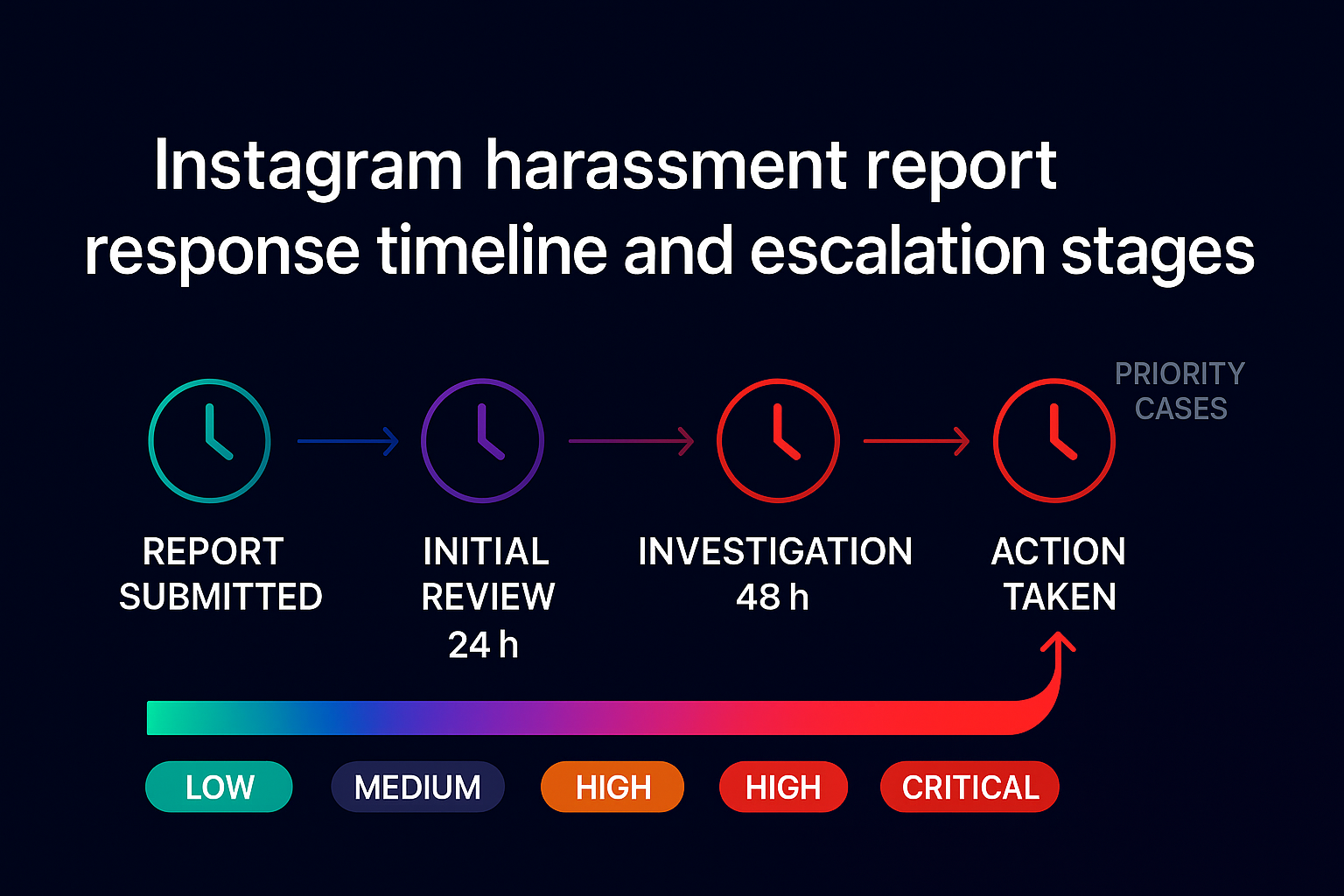
Understanding realistic timelines helps you plan follow-ups and manage expectations during the Instagram copyright takedown process. The speed of any DMCA takedown Instagram resolution depends primarily on evidence quality and case complexity.
| Scenario | Typical Timeline | Key Factor |
|---|---|---|
| Clear violation with strong evidence | 48–72 hours | Complete documentation, obvious infringement |
| Additional information requested | 1–3 weeks | Back-and-forth email clarification needed |
| Counter-notification filed | 10–14 business days | Mandatory waiting period before content restoration |
| Complex cases (multiple posts, fair use) | 10–21 days | Extended review, possible legal involvement |
| Professional service handling | 24–72 hours | Optimized evidence, established escalation channels |
After submission, you’ll receive an automated confirmation email with a unique report number. Instagram’s copyright team then evaluates whether your claim includes all required DMCA elements, assesses whether the reported use appears to violate copyright, and determines if any fair use exceptions apply. For straightforward cases where ownership is indisputable and copyright infringement is obvious, content removal happens quickly. Keep your report number accessible — you’ll need it for any follow-up communication or to provide additional information if requested.
Counter-Notifications & What to Expect
When Instagram removes content based on your DMCA takedown, the infringer has the right to file a counter-notification disputing your claim. A valid counter-notification must include the infringer’s contact information, identification of the removed content, a statement under penalty of perjury that the removal was a mistake, and consent to jurisdiction in federal court. Understanding this process is crucial for anyone filing an Instagram copyright takedown.
Once Instagram receives a valid counter-notification, it forwards the details to you. You then have 10 to 14 business days to notify Instagram that you’ve filed a lawsuit seeking a court order. Without legal action within this window, Instagram may restore the previously removed content. This is an important factor when deciding whether to pursue enforcement — for minor infringements with minimal business impact, accepting content restoration may be more practical than litigation. For significant infringements involving high-value content or repeat offenders, consulting with an intellectual property attorney is worthwhile.
Platforms across social media follow similar counter-notification procedures. If you’re dealing with content theft on multiple platforms, our guides on handling enforcement on TikTok, Snapchat, and YouTube cover platform-specific processes that complement your Instagram copyright protection strategy.
Copyright vs. Trademark Infringement on Instagram
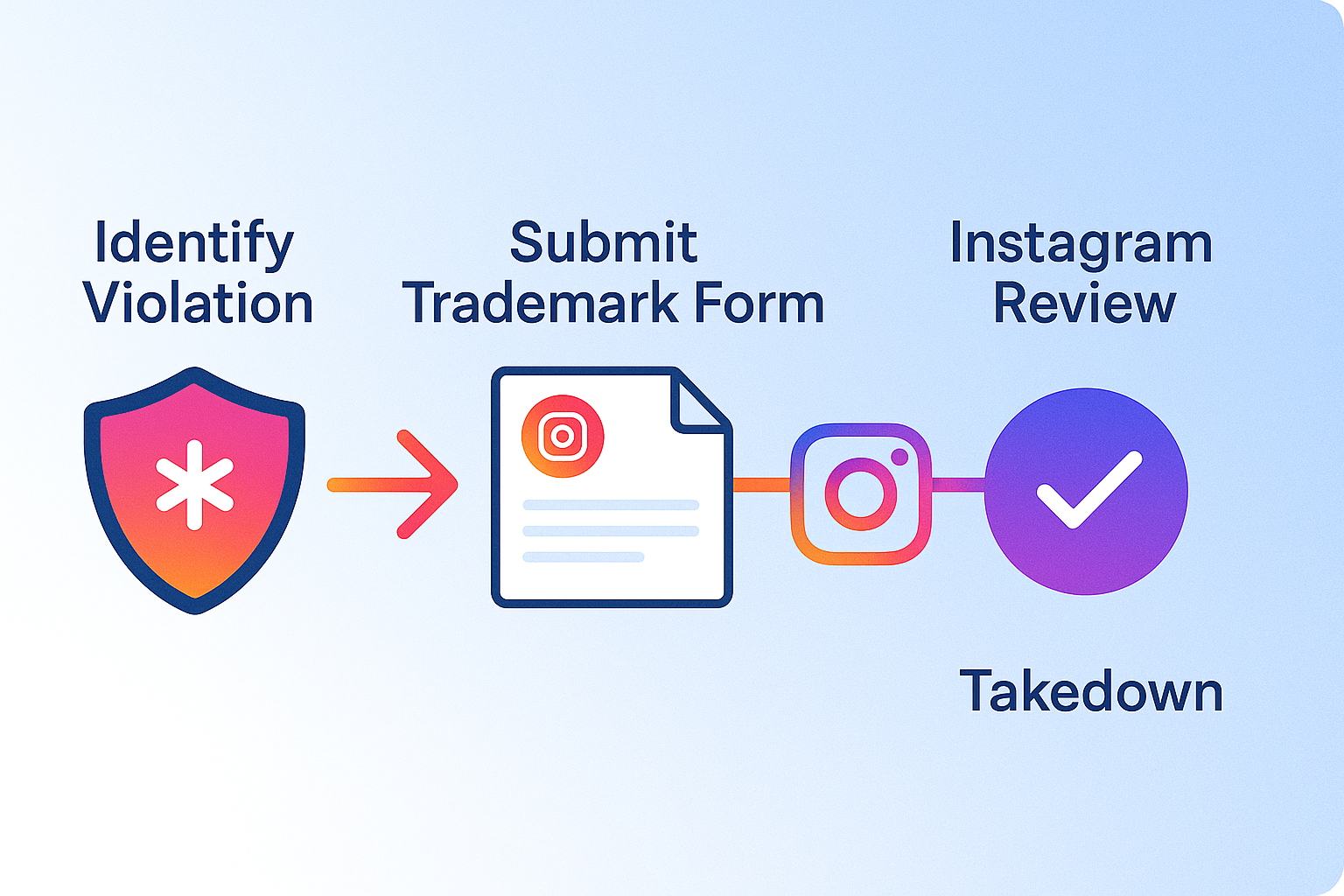
Before filing your takedown, identify which type of intellectual property violation you’re dealing with — Instagram has separate reporting forms for each, and using the wrong one delays your case significantly.
Copyright infringement involves unauthorized use of creative works you own: photos, videos, graphics, written content, music, or other original material. If someone reposted your product photography, used your video footage without permission, or copied your graphic design, that’s a copyright issue. You’d file a DMCA takedown request through Instagram’s copyright report form.
Trademark infringement involves unauthorized use of brand identifiers: logos, brand names, slogans, or other trademarked assets. If a fake account is using your company’s logo, or someone is impersonating your brand name to deceive customers, that’s a trademark issue requiring a different form. For impersonation-specific cases, our mass report Instagram account guide and Instagram spam report resource cover additional enforcement options.
| Aspect | Copyright | Trademark |
|---|---|---|
| What it protects | Creative works (photos, videos, graphics, writing) | Brand identifiers (logos, names, slogans) |
| Instagram form | Copyright report form | Trademark report form |
| Registration required? | No (automatic upon creation) | Strongly recommended |
| Common examples | Stolen photos, reposted videos, copied designs | Fake accounts with your logo, brand impersonation |
| Legal basis | Digital Millennium Copyright Act (DMCA) | Lanham Act / local trademark law |
Common Mistakes That Delay Instagram Copyright Takedowns
Understanding the pitfalls before filing saves time and increases your success rate. These are the most frequent errors that cause Instagram copyright takedown requests to be rejected or delayed.
Vague or Insufficient Descriptions
Writing “someone stole my photo” forces Instagram to request clarification, adding days or weeks to the process. Instead, provide specific details: identify the exact work, when you created it, where you published it, and how it’s being used without permission. Precision is everything in a successful DMCA takedown Instagram submission.
Incorrect URL Formatting
Instagram requires direct links to specific infringing posts, not profile pages or screenshot attachments. Open each infringing post in a web browser, copy the full URL from the address bar, and paste it into the form. Mobile app deep links and profile-level URLs won’t work — the copyright team needs post-specific URLs to take action on your takedown request.
Missing or Mismatched Electronic Signature
Your electronic signature must match your legal name exactly. Nicknames, usernames, or variations invalidate the legal declaration statement. This is a critical DMCA requirement — without a proper signature, your entire submission is legally incomplete.
Fair Use Confusion
Not every unauthorized use constitutes copyright infringement. Commentary, criticism, news reporting, education, and parody may qualify as fair use under certain conditions. Filing takedown request submissions against legitimate fair use content damages your credibility with Instagram’s copyright team and may expose you to legal liability. If you’re uncertain whether the use is actually infringing, consult a copyright attorney before filing.
False DMCA Claims & Scam Protection on Instagram
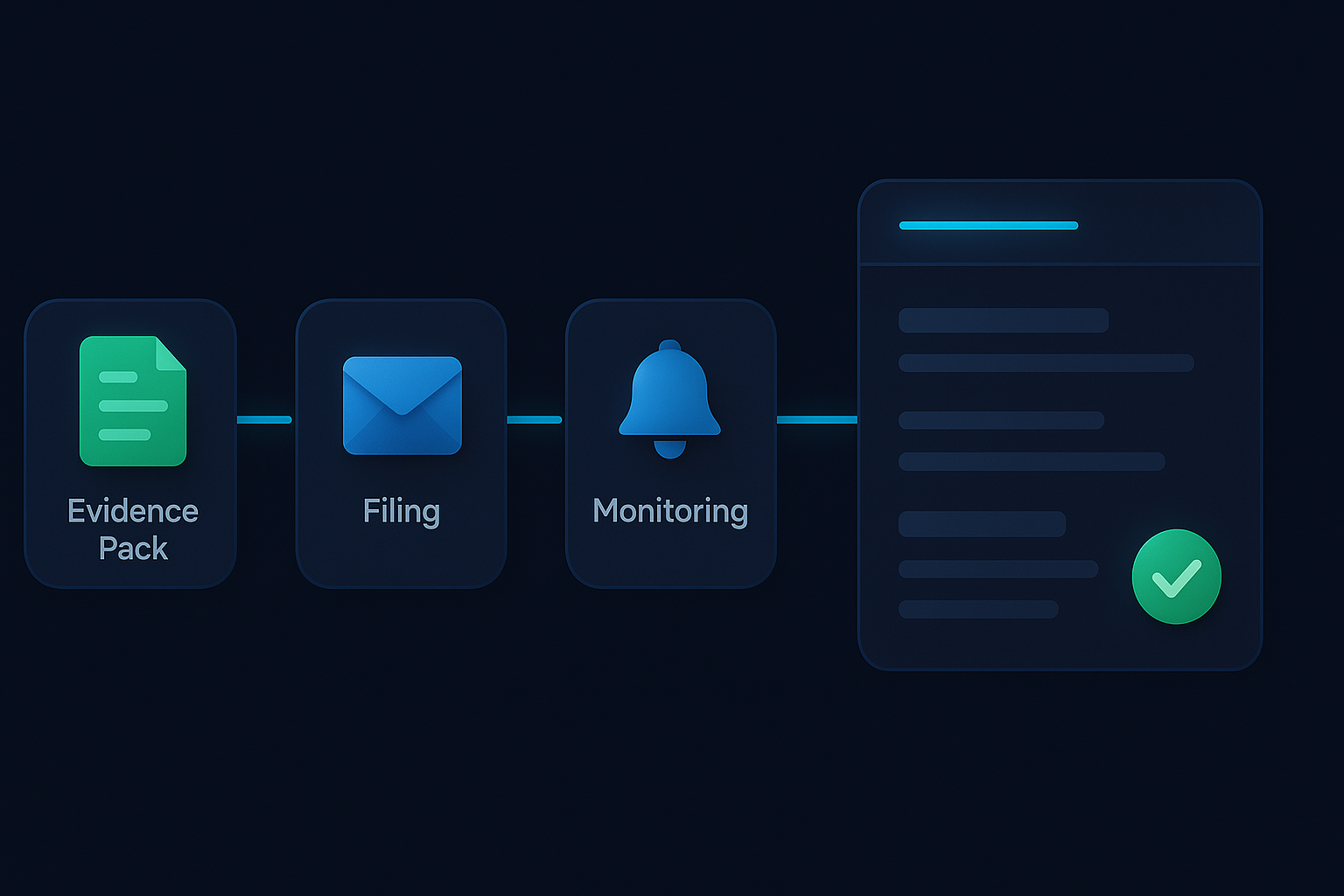
An alarming trend has emerged where scammers abuse the DMCA process to extort content creators and businesses. Using Meta’s Rights Manager tool or filing fraudulent DMCA takedown Instagram claims, bad actors issue illegitimate takedowns on content they don’t own — then demand payment to stop. This weaponization of copyright tools affects influencers and brands across Instagram accounts, Facebook pages, and other Meta platforms.
If you receive a false Instagram copyright takedown against your own original content, file a counter-notification through Instagram immediately. Provide clear evidence of your ownership, including original files with metadata, publication timestamps, and any copyright registration documents. False DMCA claims carry serious legal consequences under the Digital Millennium Copyright Act: filers face liability for damages, attorney fees, and potential criminal perjury charges. Document the false claim thoroughly — this evidence supports both your counter-notification and any potential legal action against the fraudulent claimant.
To proactively protect yourself, maintain organized archives of all your creative work with creation dates, register valuable content with the U.S. Copyright Office, and watermark strategic content. These preventive measures make it substantially harder for anyone to claim your work as theirs. Cross-platform protection is equally important — similar scam tactics appear on Twitter/X and WhatsApp, so building strong ownership documentation benefits you everywhere.
Best Practices for Instagram Content Protection in 2026
Beyond reactive DMCA enforcement, proactive content protection reduces your exposure to copyright infringement on Instagram and strengthens any future takedown request you may need to file.
Start by implementing strategic watermarking on your most valuable visual content. Position watermarks where they’re visible but don’t distract from the work — bottom corners or subtle overlays across the image center make unauthorized use less attractive while maintaining aesthetic quality. For photographers and designers, embedding IPTC metadata with your name, copyright notice, and contact information into every exported file creates an invisible ownership trail that holds up in DMCA disputes.
Maintain a systematic content archive. Every time you publish original content to Instagram or any other platform, save the original files alongside a dated screenshot of the published post. This habit — which takes seconds per post — creates an unassailable evidence trail should you ever need to file a DMCA takedown request. Cloud storage services with automatic date stamping work well for this purpose.
Monitor your content proactively using reverse image search tools. Google Images, TinEye, and Pixsy allow you to scan the web for unauthorized copies of your photo or video content. Set up periodic searches — monthly for high-value content, quarterly for standard portfolio pieces. Early detection means faster enforcement and less damage to your brand. If monitoring reveals infringement across multiple platforms simultaneously, our cross-platform enforcement services cover TikTok, X/Twitter, Snapchat, and more.
When to Hire a Professional Instagram Copyright Takedown Service
Filing your own DMCA takedown on Instagram works well for occasional, clear-cut infringements. But certain situations demand professional expertise — and trying to handle them alone often means slower results and more frustration.
Consider professional assistance when you’re facing bulk copyright infringement across multiple posts or Instagram accounts, when the same infringer creates new accounts after being taken down, when your initial DIY submissions were denied and you need to strengthen the approach, when time-sensitive content theft is actively costing you revenue, or when counter-notifications require legal response coordination.
What Our Professional Takedown Service Provides
Our Instagram copyright takedown service at Telegram Growth Studio handles the complete process from evidence compilation to final resolution. We analyze the infringement to identify the strongest policy violations, compile professional evidence packages that meet Instagram’s internal standards, submit reports through optimized channels for faster processing, monitor responses and escalate through established pathways when needed, and coordinate counter-notification responses if the infringer disputes the takedown.
With 134+ successful enforcement actions and a 95%+ success rate, we understand exactly which evidence combinations and submission approaches trigger fastest action. Our typical turnaround is 24–72 hours — compared to the weeks of back-and-forth that DIY submissions often require. Whether you’re dealing with a single stolen photo or video or a systematic content theft operation across dozens of accounts, we bring the experience and established channels to resolve it efficiently.

| Factor | DIY Filing | Professional Service |
|---|---|---|
| Cost | Free | $150–$500 |
| Typical timeline | 48h – 3 weeks | 24–72 hours |
| Evidence quality | Variable | Optimized for Instagram’s review process |
| Success rate | Depends on preparation | 95%+ on first submission |
| Counter-notification handling | You manage it | Full coordination and response |
| Multi-platform enforcement | Separate per platform | Simultaneous cross-platform action |
📌 Key Takeaways
- Instagram copyright takedown uses the DMCA process — always file through the official copyright report form, not general reporting tools.
- Strong evidence (original files with metadata, timestamps, direct post URLs) is the #1 factor for fast approval of your takedown request.
- Instagram typically processes DMCA takedown requests within 48–72 hours for clear cases.
- Your electronic signature must exactly match your legal name — variations invalidate the entire submission.
- Counter-notifications give the infringer 10–14 business days to dispute; without a lawsuit, content may be restored.
- Copyright protects creative works (photo or video, graphics, writing); trademarks protect brand identifiers — use the correct form for each.
- False DMCA claims carry perjury penalties under the Digital Millennium Copyright Act — only file legitimate requests.
- Proactive content protection (watermarking, metadata, monitoring) reduces your exposure to copyright infringement on Instagram.
- Professional services deliver 24–72h results with 95%+ success rates for complex or urgent cases.
Frequently Asked Questions About Instagram Copyright Takedown
How do I file an Instagram copyright takedown?
Access Instagram’s copyright report form, enter the rights owner’s full legal name, describe your copyrighted work with a proof link, provide direct post URLs to the infringing content, add your electronic signature matching your legal name, and submit. Instagram reviews valid DMCA requests within 48–72 hours and removes confirmed violations.
How long does a DMCA takedown on Instagram take?
Clear violations with strong evidence: 48–72 hours. Cases needing additional documentation: 1–3 weeks. If a counter-notification is filed: 10–14 business days waiting period. Professional services typically achieve results in 24–72 hours through optimized evidence and established escalation channels.
What evidence do I need for an Instagram copyright takedown?
Original files with embedded metadata (creation date, camera info, authorship), timestamps showing your content was published first, direct URLs to your original work and the infringing content on Instagram, a specific description of how your work is being used without permission, and your legal name for the electronic signature. Copyright registration certificates strengthen your case but aren’t legally required.
How to file a DMCA takedown request on Instagram for stolen photos?
Gather your original photo files with EXIF metadata showing creation date and camera details. Screenshot the stolen content on Instagram with the visible URL, account name, and post date. Access the copyright report form, describe the original photo specifically including when and where you created it, provide both URLs, sign with your legal name, and submit. Instagram typically acts on clear photo theft within 48–72 hours.
Can someone file a false DMCA takedown on my Instagram content?
Yes, fraudulent DMCA takedowns are an increasing problem on Instagram and other Meta platforms. If you receive a false claim, file a counter-notification with comprehensive proof of your ownership. Filing false copyright claims violates perjury laws under the Digital Millennium Copyright Act and can result in significant legal liability for the false claimant, including damages and attorney fees.
What is the difference between copyright and trademark on Instagram?
Copyright protects original creative works — photos, videos, graphics, written content, and music. Trademark protects brand identifiers — logos, company names, slogans, and trademarked assets. Instagram provides separate reporting forms for each type of intellectual property infringement, and using the wrong form causes significant delays.
What happens after Instagram removes infringing content?
Both parties receive notification of the removal. The infringer can file a counter-notification within 10–14 business days to dispute the takedown. Without a counter-notification, removal is permanent. Instagram applies a repeat infringer policy — accounts with multiple confirmed copyright violations may face permanent suspension.
Does Instagram remove copyright violations permanently?
Yes, if the infringer does not file a counter-notification within 10–14 business days. Additionally, Instagram’s repeat infringer policy means accounts accumulating multiple DMCA strikes face escalating consequences, from temporary restrictions to permanent account removal.
What is a DMCA counter-notification on Instagram?
A counter-notification is a formal legal response filed by the person whose content was removed, claiming the takedown was filed in error or misidentification. It must include their contact information, identification of the removed content, a statement under penalty of perjury, and consent to federal court jurisdiction. The original complainant has 10–14 business days to file a lawsuit, or Instagram may restore the content.
Can I hire someone to handle my Instagram DMCA takedown?
Yes. Professional DMCA takedown services compile evidence, submit reports through optimized channels, and handle all follow-ups and counter-notifications. Telegram Growth Studio offers expert Instagram copyright takedown assistance with 24–72 hour typical turnaround and 95%+ success rate. Contact us via Telegram @SolutionsSupporter or WhatsApp +57 313 7269189.
Has the Instagram copyright takedown process changed in 2026?
The core DMCA form and 48–72 hour review window remain, but in 2026 Instagram leans more heavily on Meta’s Rights Manager matching, so submissions with registered or fingerprinted original files clear faster. Repeat-infringer strikes now track across linked Threads and Facebook profiles, Reels audio claims require naming the exact track or sound, and embedded IPTC metadata carries more weight given the rise in fraudulent counter-notifications.
Protect Your Content — Talk to Our Copyright Team Today
Stop content theft on Instagram. Our experts compile evidence, file your DMCA takedown, handle counter-notifications, and deliver results in 24–72 hours.